THE USEFUL PART
- Distinguish customers, paid creators and presenters.
- Film a demonstration that supports the actual message.
- Plan approvals, usage rights and necessary disclosures.
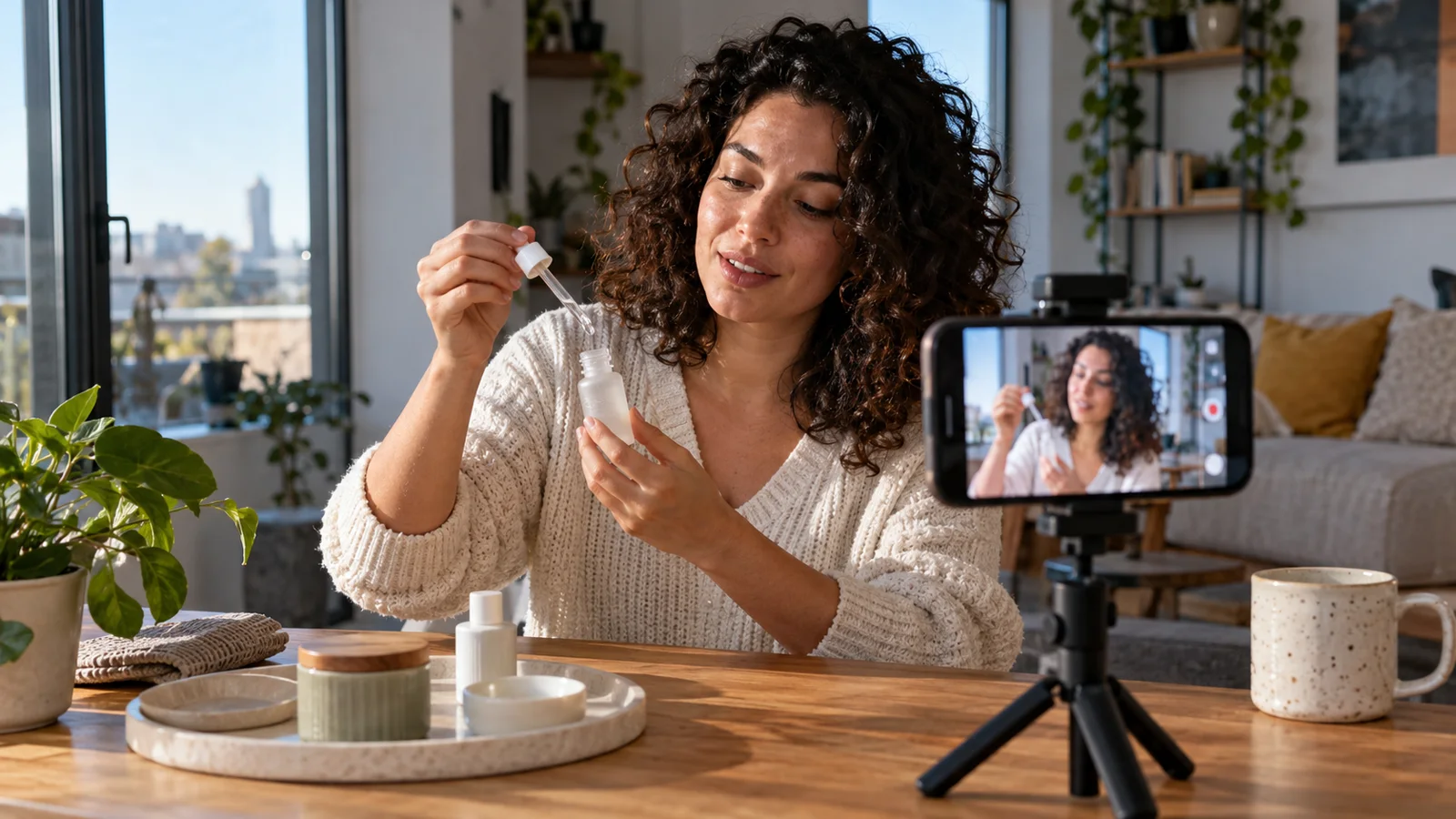
Creator-style video is useful when a real person can demonstrate a product, explain an experience or make a message feel natural in a social feed. The strongest starting point is a credible person doing something relevant, rather than a performance designed to imitate an independent customer.
“UGC” is often used loosely. A customer posting voluntarily, a paid creator producing a demonstration and an actor presenting a script are different things. Decide which you are commissioning and describe it honestly. Real footage only builds a useful connection when the role and message remain truthful.
Define the creator’s role before writing the hook
Write down why this person is right for the piece. Are they an actual customer sharing an experience? A knowledgeable creator demonstrating a product? A presenter explaining an approved process? Each role suggests different questions, footage and wording.
Do not ask a paid performer to invent a personal customer story. If a creator has tried a product, agree which observations they can accurately make. A demonstration should show what the product does in the circumstances being filmed, with any important limitations kept visible.
This clarity helps production too. The creator knows what to prepare, the reviewer knows which statements need checking, and the editor understands which parts of the performance must retain their context. It also gives the audience a fairer basis for judging the message.
Build the idea around something observable
A useful creator brief names the audience, the problem, the thing being shown and the next step. It does not need to prescribe every gesture. Give the person enough structure to deliver the message naturally while leaving room for language that sounds like them.
For a hypothetical travel cup demonstration, the useful action might be showing how the lid opens and how the cup fits into a daily routine. That is different from claiming it will never leak under any condition. Film the actual action the viewer is being asked to understand.
Record a clean view of the important detail. Avoid hiding it under unrelated cutaways or making the viewer infer how something works. A small, well-lit practical action can be more informative than a complicated sequence of attractive shots.
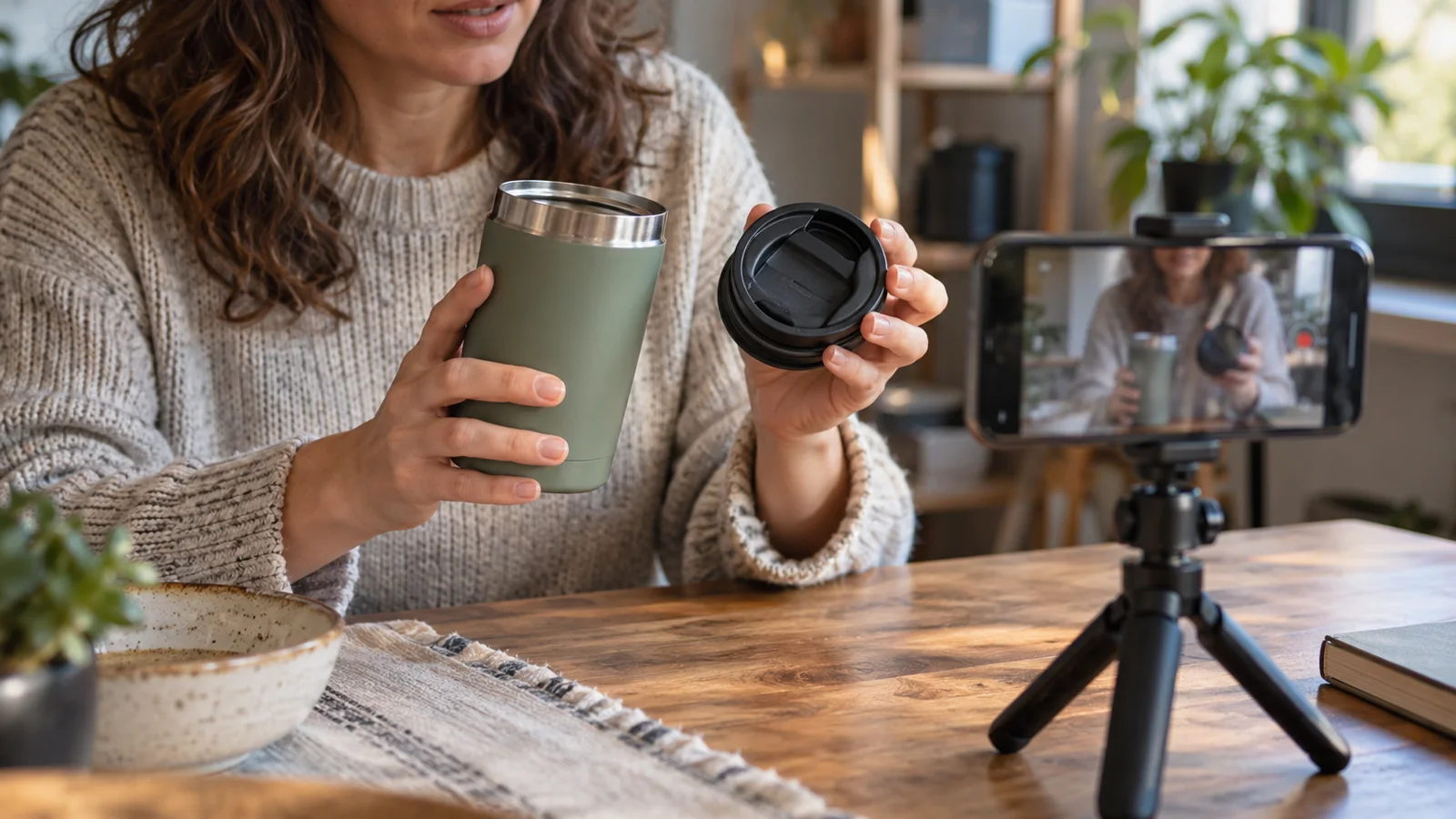
Make the production natural and legible
Creator-style does not have to mean careless sound, harsh light or unreadable captions. Choose a setting that suits the person and product, then control distractions. A clean recording lets the editor preserve conversational delivery without fighting technical problems.
Plan framing for the actual placements. A vertical version needs room for the product, the speaker and platform interface areas. A website edit may need a different composition. Agree the versions before filming rather than assuming one crop will suit every destination.
Check the product’s appearance in camera. Reflections, labels, bright windows and hand placement can obscure the very detail being demonstrated. Record a few clear supporting shots and a complete demonstration, not just the opening line.
Make paid relationships understandable
The FTC’s endorsement guidance says endorsements must be honest and material relationships that viewers would not expect may need clear disclosure. Payment, free products and employment can affect how a recommendation is understood. See the FTC’s endorsement questions and answers.
Plan the appropriate disclosure with the brand’s responsible reviewer before filming and editing. Do not treat a platform tool or a hidden description as an automatic solution for every situation. This is production planning, not a legal determination of whether a particular advertisement meets every applicable requirement.
Commission useful variations, not random volume
Decide what each variation is intended to explore. You might record two opening questions, a demonstration-led version and a more explanatory version. Keep the underlying product claim consistent so the alternatives can be meaningfully compared.
A practical shoot plan includes the complete core answer, the demonstration, alternate openings and a clear closing action. List which edits are actually included in the quote. Raw footage, extra versions, creator usage and paid-media rights should be agreed rather than assumed.
Keep a record of the approved wording and the creator’s role. If the product or offer changes, review the old edit before reusing it. A natural delivery does not make an outdated claim safe or accurate.

Review the edit in the place it will run
Watch the finished piece on a phone at normal size, with and without sound. Can you understand the product or service? Are captions readable? Is the disclosure, if required, clear in the actual placement? Does the next step match the page the viewer reaches?
Check that cutting between takes has not changed the speaker’s meaning. If a demonstration was shortened, make sure it still represents what happened. Do not add a reaction or endorsement simply because it makes the edit feel more persuasive.
When testing paid versions, compare useful outcomes with an agreed measurement plan. A video that receives more views is not necessarily the one bringing the most relevant enquiries. Audience, offer and destination page all influence the result.
A short creator brief you can use
- Person and role: customer, creator, employee or presenter.
- Audience: who needs to understand this specific product or service.
- Message: one claim that can be supported accurately.
- Demonstration: what will actually happen on camera.
- Approvals: who checks claims, disclosures and the final edit.
- Versions and rights: formats, usage, duration and agreed variations.
- Next step: the action and destination after watching.
Explore the Creator & social package or social video services. Bring the real product, the actual use and an honest role for the person on camera. That gives the production a stronger foundation than trying to manufacture the appearance of authenticity.
A CLEARER FIRST CONVERSATION
Bring your idea.
We’ll talk production.
Discuss your video projectAI-assisted editorial prepared by EVKII for Stoking Fire Productions. Images are generated editorial illustrations of fictional people and settings; they are not client testimonials, project evidence or photographs of the SFP team. Examples described as hypothetical are planning examples. Scope, permissions and specialist review are agreed for each production.