THE USEFUL PART
- Start with the uncertainty behind the enquiry.
- Match the real person or process to the question.
- Measure useful conversations, not views alone.
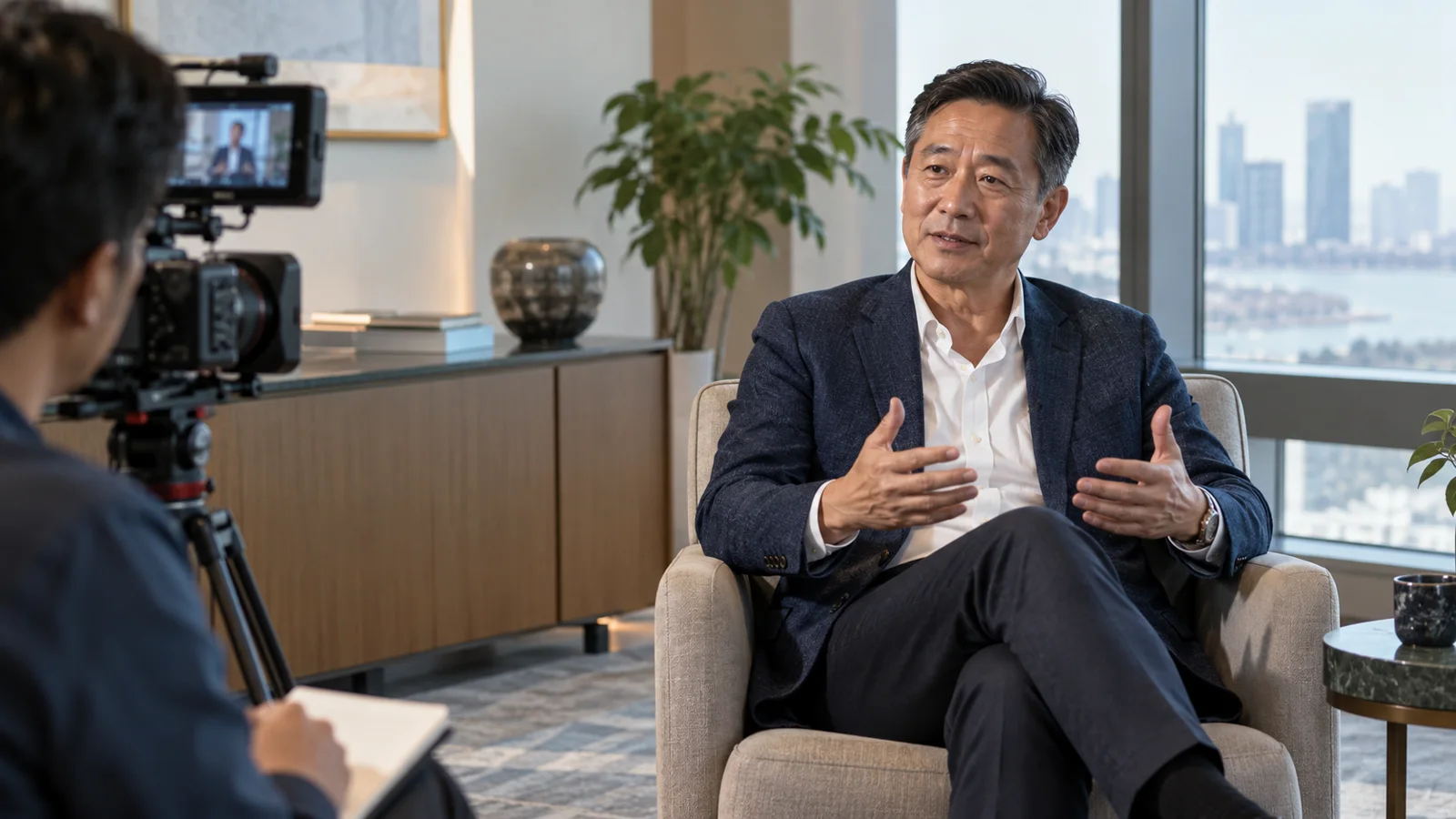
Real business video is most useful when the viewer needs to meet a person, understand a process or see something that actually happened. An interview with your founder, a customer explaining an experience or a demonstration in your own workspace can provide that evidence. A synthetic scene cannot document your actual team or a real customer interaction.
That is a reason to choose filmed production for the right job, rather than a promise that every real video will outperform every AI asset. The message, audience, placement and quality of the production still matter. Start by asking what the viewer needs to believe, and what you can honestly show.
Find the uncertainty behind the enquiry
A small-business website often explains the offer without showing the experience of working with the people behind it. A prospective customer may understand the service and still wonder whether the team will listen, whether the process is clear or whether the work fits their situation.
Write down the three questions you hear before an initial appointment. Use the questions customers actually ask, rather than the phrases your business wishes they used. Then choose one that a person on your team can answer with a specific example. That is a stronger starting point than trying to compress the entire company into a two-minute introduction.
For example, a hypothetical local design practice might hear, “What happens after I bring you an idea?” The useful film is a designer walking through the first meeting and showing an approved, nonconfidential sample. A dramatic montage alone would leave the question unanswered.
Choose proof that belongs to your business
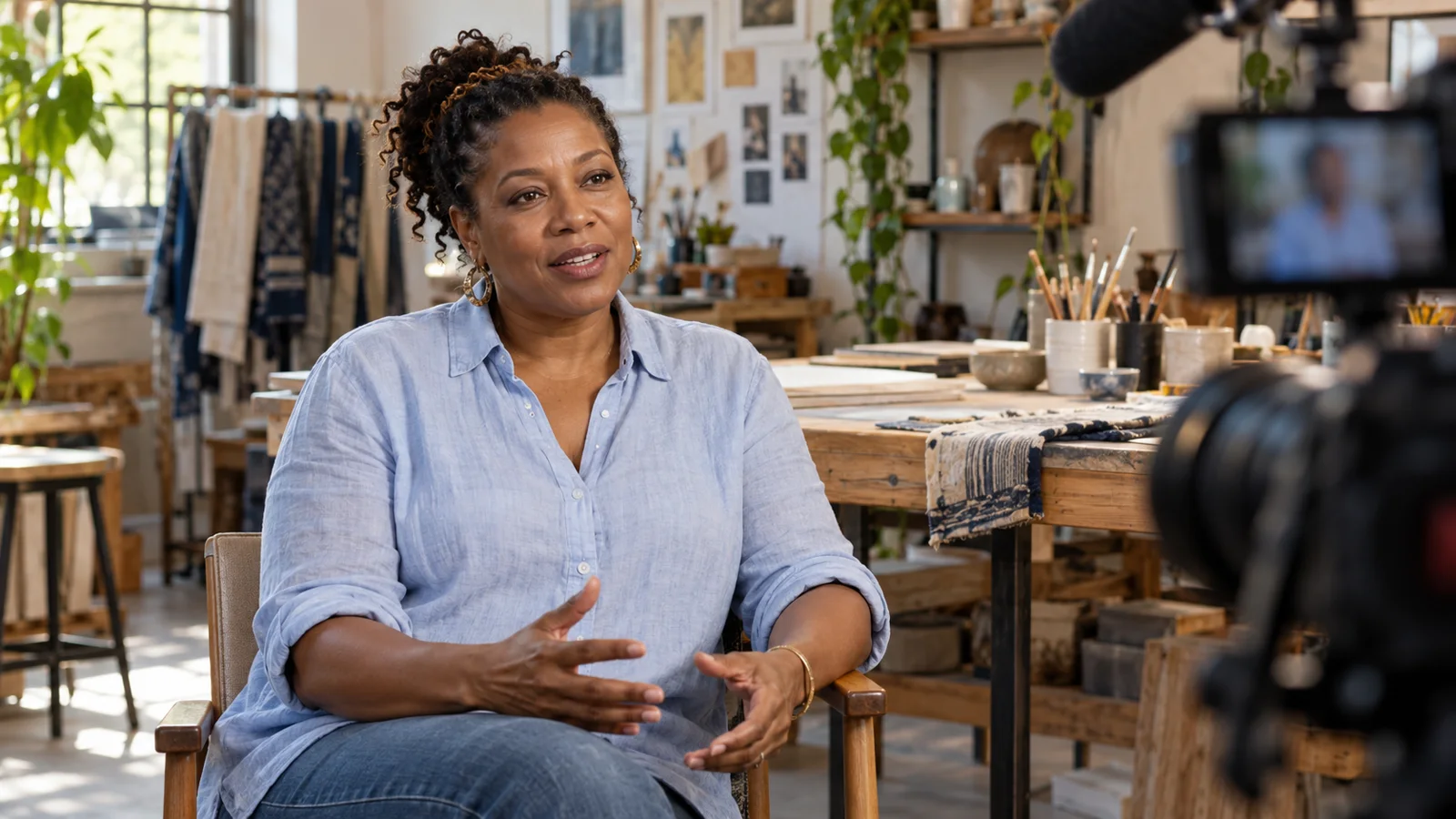
Different kinds of uncertainty need different pictures. A founder interview can reveal the thinking behind a business. A process film can show the care that goes into a service. A customer story can describe an individual’s experience, provided that person is comfortable participating and the statement is accurate.
The useful distinction is between an assertion and something the viewer can examine. “We care about detail” is an assertion. A team member explaining why a particular detail matters, while demonstrating it, gives the audience something more concrete. Keep the explanation understandable to someone outside your industry.
Do not substitute an actor or generated person for a genuine customer without making the role clear. Do not edit an answer so that it expresses a claim the speaker did not make. The integrity of the evidence matters as much as the finish of the image.

Make the interview feel like a conversation
People do not need to become presenters to explain work they know. Prepare topics and examples, then let the interviewer ask clear questions in ordinary language. A memorised paragraph can become a distraction if the person is concentrating on reciting it rather than communicating.
Ask for a situation, a decision and an explanation. “What do you do?” may produce a brochure answer. “What is the first thing you help a new client understand?” gives the conversation a practical focus. Allow a pause, ask a follow-up and record a clearer second explanation when necessary.
A thoughtful production also gives the subject a comfortable space, suitable lighting and clear sound. The setting should support the conversation. It should not be so busy that the viewer has to work to follow the person speaking.
Give each film one clear home
Decide where the first finished version will appear. A homepage introduction should quickly make the business and its people understandable. A service-page explanation should answer a more specific question. A film sent after a sales conversation can assume some context that a first-time visitor does not have.
Build the page around that purpose. Place the film near a useful headline, add a short written explanation and offer a relevant next step. Do not hide the only explanation behind a play button. Someone scanning with sound off should still understand what the business does and why the film is worth watching.
For a website version, agree captions, a representative thumbnail and a sensible loading approach. Google’s video search guidance also highlights discoverable video elements and stable thumbnails. Search eligibility is a separate technical task; merely uploading a film does not guarantee indexing or traffic.
Measure whether it helps the right conversation
Views can tell you that a film is being encountered, but they do not tell the whole business story. Decide what useful progress looks like before publishing. It could be qualified project enquiries, people arriving better prepared for a consultation or fewer repeated questions in an introductory call.
Ask the person handling enquiries what viewers mention. Check whether the next-step link works and whether mobile visitors can read the page and play the film. If you compare versions, keep the surrounding offer and audience as consistent as practical. A change in traffic quality can otherwise be mistaken for a change in creative quality.
Use AI where illustration is the job
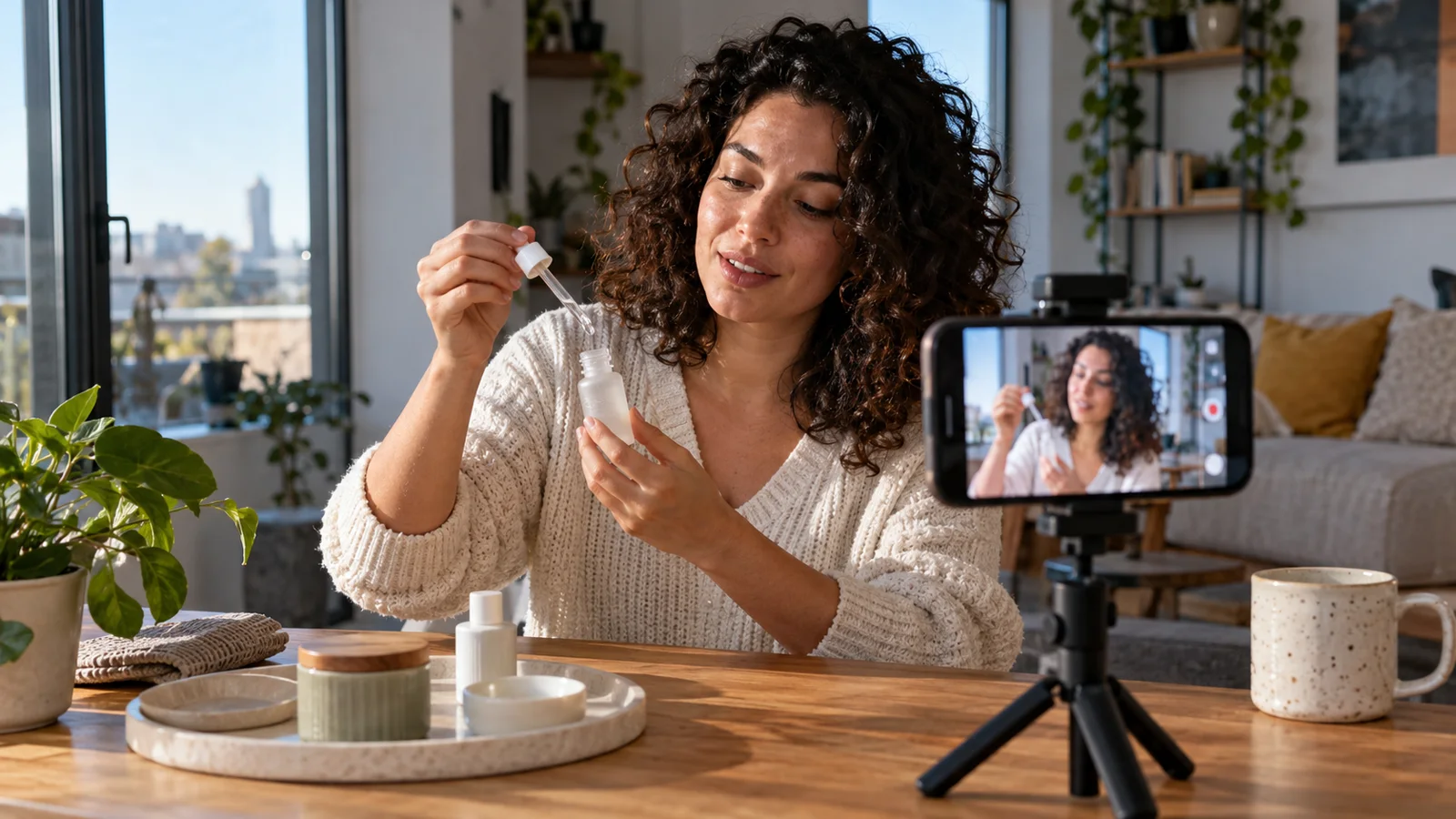
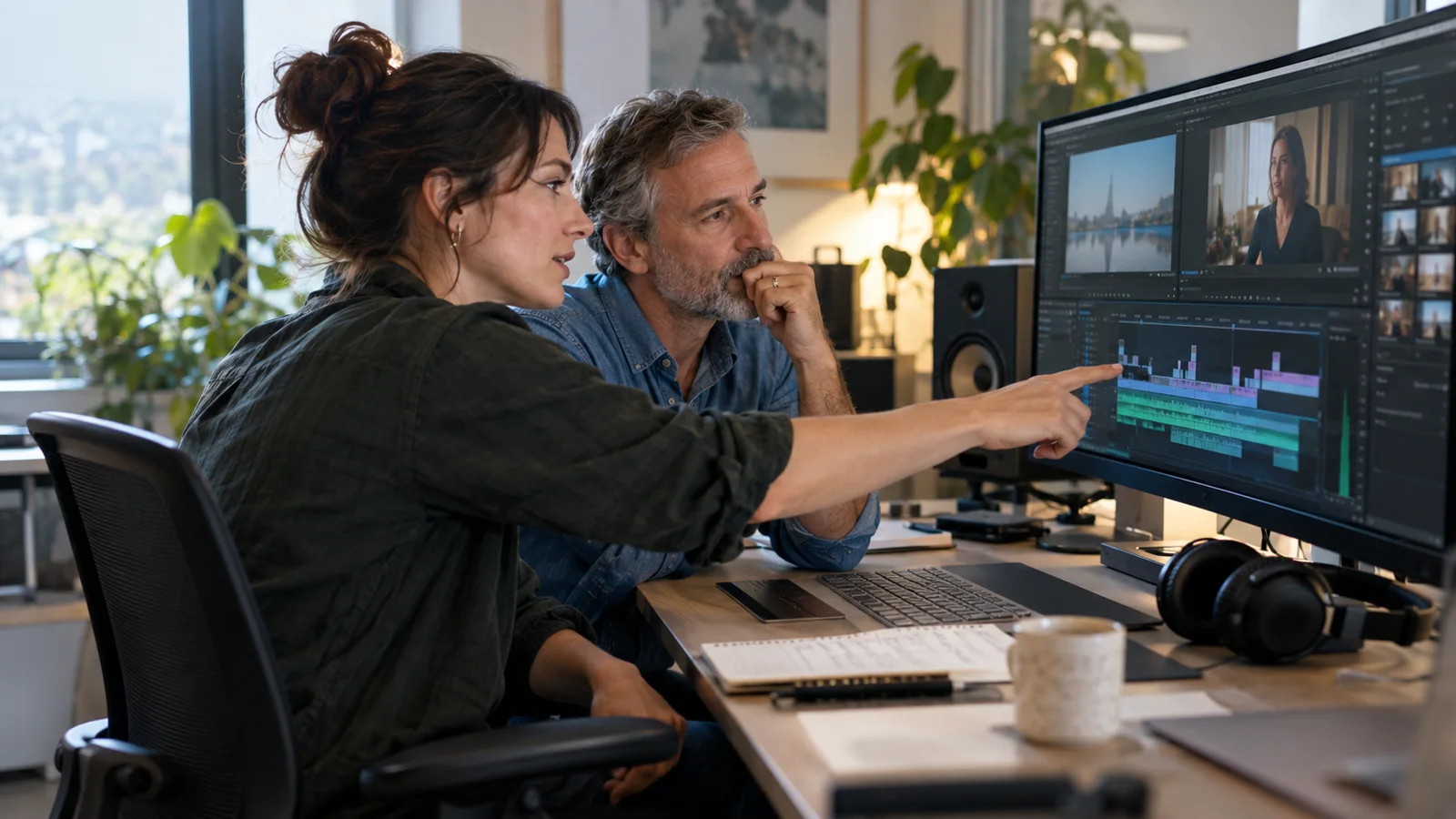
Generated imagery can help explain a concept or explore a visual direction. It should be described honestly when a viewer could mistake it for documentary evidence. The editorial images in this guide are illustrations, not photographs of Stoking Fire clients or productions.
When the purpose is to introduce your actual adviser, clinician, maker or customer, film that person. When the purpose is to show a real facility or demonstrate a real product, record the relevant evidence. Choose the medium according to what the audience needs to know, rather than treating either technology as a universal answer.
Start with a film you can actually use
- Choose one audience and one question from a real sales conversation.
- Identify the person best placed to answer it, with a concrete example.
- Decide which real location, process or approved material supports the answer.
- Agree the page, captions, thumbnail and next step before filming.
- Review the film for accuracy, permissions and relevance before publication.
For businesses in San Diego and Orange County, the next step is a practical production conversation about people, location and scope. Explore the professional interview and customer-story packages, or share a brief. A useful first film does not need to tell every story. It needs to tell one story clearly enough to help someone take the next step.
A CLEARER FIRST CONVERSATION
Bring your idea.
We’ll talk production.
Discuss your video projectAI-assisted editorial prepared by EVKII for Stoking Fire Productions. Images are generated editorial illustrations of fictional people and settings; they are not client testimonials, project evidence or photographs of the SFP team. Examples described as hypothetical are planning examples. Scope, permissions and specialist review are agreed for each production.